Initial balance: the first hour’s map
Every trading day opens with an argument it has to settle before it can do anything else: what is this thing worth this morning, after everything that happened overnight?
The initial balance is the first hour’s answer. On ES, that means the range built between 9:30 and 10:30 ET, the A and B periods on a TPO chart. It is the day’s opening bracket, and how the rest of the session treats that bracket is one of the most useful context reads in futures.
Where the idea comes from
The term is floor-era. The first hour was when the pit’s locals established the day’s initial trading range, absorbing the opening orders and finding the prices where two-sided business could start. Balance, as in: the range where buyers and sellers first balanced.
The pits are gone; the job is not. The first hour still has to digest the overnight session, the morning economic data, and every opening order that was queued at 9:29. The range that digestion builds is information.
The factors that affect the IB nowadays are very complex. Institutions balancing portfolios, traders initiating positions for the day, and options dealers hedging flows. All while scalpers and high-frequency algos run rampant, taking advantage of the large liquidity and fast tempo created by those forces. It leads to a lot of randomness in the moves the market makes for the first hour, but no matter what the IB is like, the mechanics of how we read it never change.
The width read
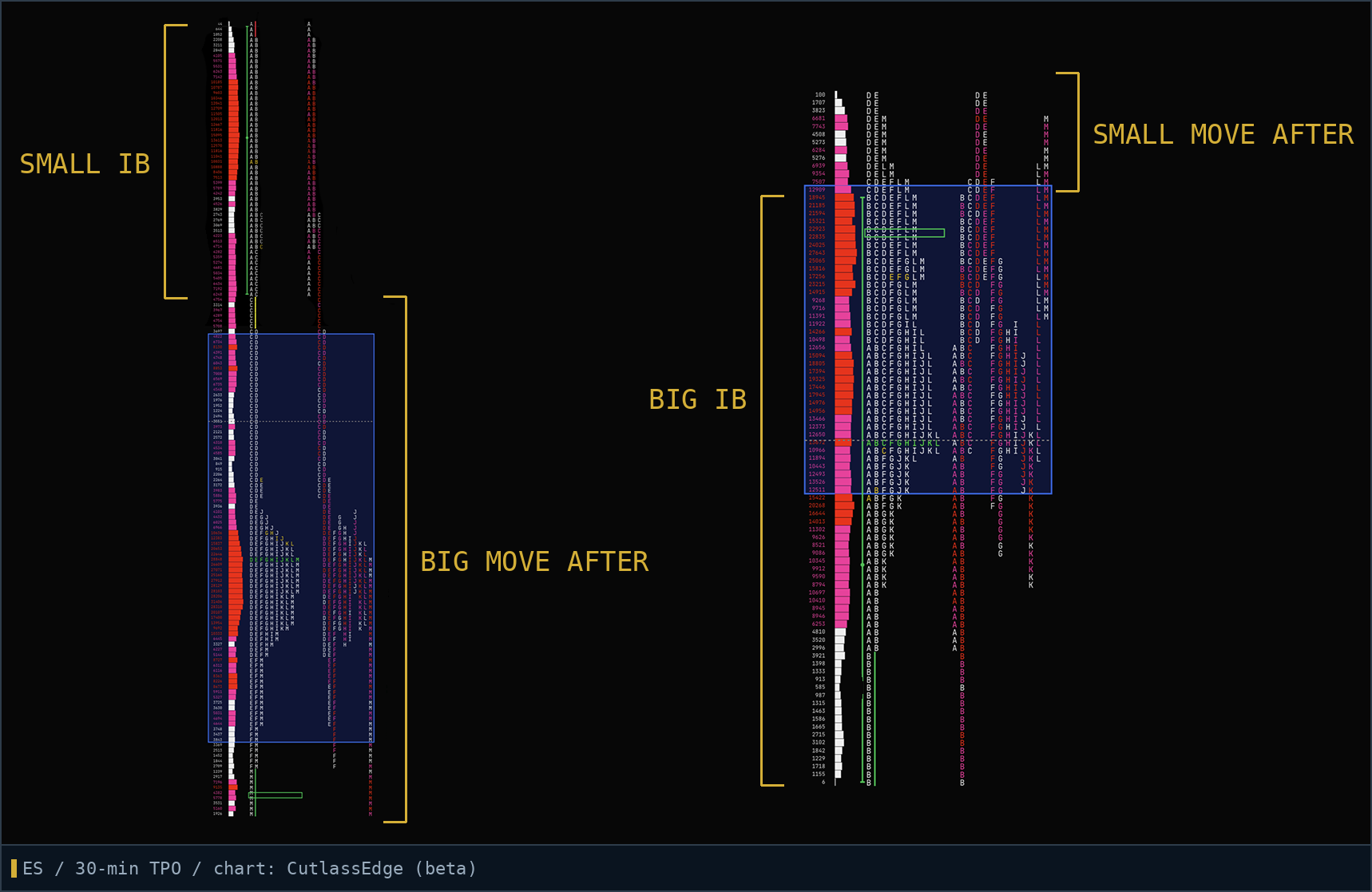
The single most useful thing about the initial balance is its width, because width is a statement about conviction.
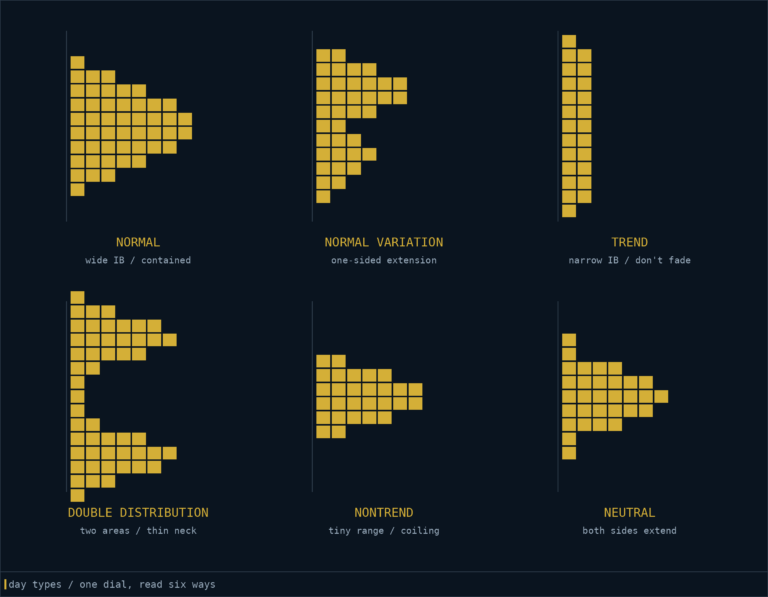
A narrow IB is kindling. The first hour agreeing on a tight range means nobody has taken control yet, and a tight bracket is cheap to break. Narrow IBs precede a disproportionate share of big directional days: the breakout has less to chew through and trapped traders on the wrong side add fuel. When I see a tight first hour, my checklist shifts toward breakout scenarios and away from fading edges.
A wide IB is a container. A first hour that already traveled a full day’s range has burned a lot of the day’s business. Wide IBs often end up holding the entire session, and the edges of that big bracket become fade candidates rather than breakout triggers.
Neither is a signal. Both are the difference between planning for a day that stretches and a day that chops.
Extension: when the bracket breaks
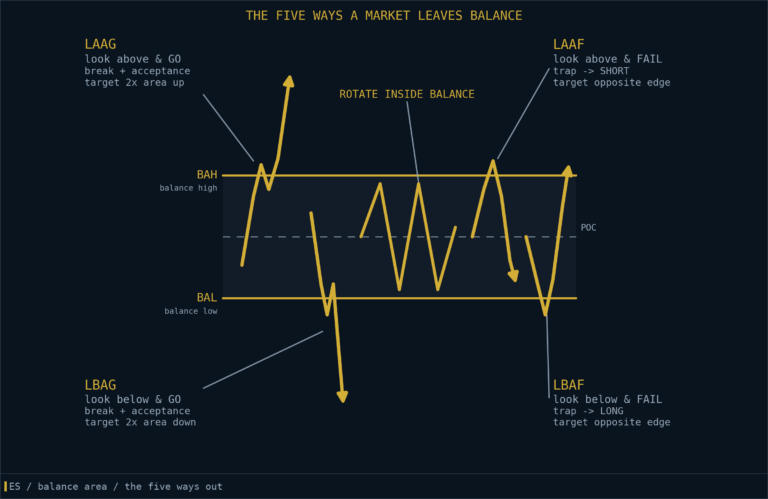
When price leaves the initial balance, that is range extension, and it is the day announcing that someone other than the opening crowd has shown up. In auction terms, initiative activity: buyers extending above the IB high or sellers below the IB low are choosing to do business at prices the first hour called unfair. We consider this the start of one-timeframing, not because it guarantees we’ll keep going, but because if the market is going to make a big directional move on any particular day it will often start with the break of the IB.
The quality of the extension is the tell, and it reads the same as any auction move. Extension that finds acceptance (letters stacking, value migrating behind it) is a day changing character, and the day-type playbook takes over (trend day, double distribution). Extension that gets tailed and slapped back inside is a failed advertisement, and a failed break of one IB extreme sets up the rotation toward the other.
A pattern worth respecting: the market often tests one side of the IB, fails, and travels to test the other. The first hour built both edges for a reason; the day likes to audit both.
The IB as the day’s ruler
Beyond break-or-hold, the initial balance gives the day a unit of measure. Profile traders talk in IB multiples: a day that extends to two times the IB range has done something different than a day that poked three ticks past the high. Targets set as multiples of the IB (one common habit: looking for extension legs roughly the size of the IB itself) keep expectations calibrated to today’s volatility instead of yesterday’s opinions.
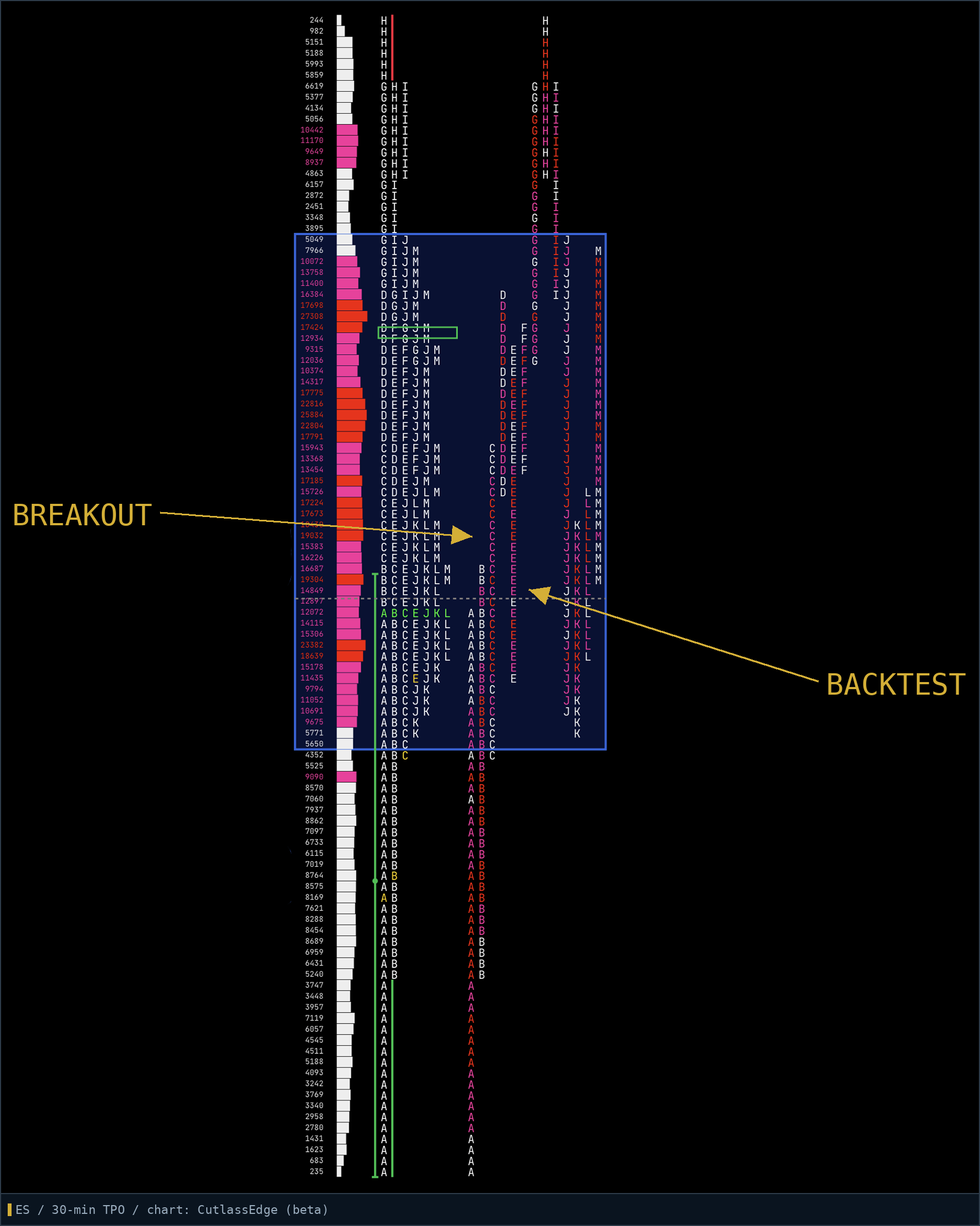
And the IB extremes stay reference levels all session, long after the break. A morning IB high that gets extended above often gets retested from above in the afternoon, and how that retest behaves tells you whether the afternoon holds the gains.
Where the IB fits in the morning routine
For me the initial balance is a checkpoint, not a countdown. The overnight and the open location set the early context (inside yesterday’s value or out, near unfinished business or clear of it). The first hour then either confirms that context or argues with it. At 10:30, with the bracket complete, the day has told you its opening width, which side it has tested, and how much conviction showed up. That is when the day’s scenarios get finalized, and it is why so much of my playbook keys off the IB completing rather than the opening print.
This doesn’t mean I never trade during the first hour, it just means there is a much smaller group of setups I can take, and only under very specific conditions, until we’ve established the IB range.
The mistakes
Don’t trade every IB break mechanically. Breaks fail constantly, especially on balanced days inside yesterday’s value. The break is information; the acceptance is the trade.
Don’t focus on the IB on the wrong day. Half-session holidays, big data mornings at 10:00 ET, and triple/quad witching all distort the first hour. The bracket still exists; its usual meanings need a discount.
Don’t ignore where the IB sits. A narrow IB inside yesterday’s value is coiling. A narrow IB above yesterday’s high after a gap is a market holding a reprice. Width without location is half a read.
You shouldn’t assume one convention. The 60-minute IB is the standard I use on index futures, but you will find 30-minute or 15-minute versions and market-specific conventions. Match the tool to your market and stay consistent.
FAQ
What is the initial balance in trading?
The range established during the first period of the regular session. On US index futures, most profile traders (me included) use the first hour, 9:30 to 10:30 ET.
Is the initial balance breakout a signal?
No. It is initiative activity that needs acceptance to mean anything. Failed IB breaks are among the most common traps in futures.
Does the overnight session count toward the IB?
No. The initial balance is a regular-session concept. The overnight is its own context and worth reading separately before the open.
What is a good initial balance size?
There is no good or bad, only narrow or wide relative to that market’s recent norms. Keep a rough feel for the recent average first-hour range and read today against it.
Does the initial balance work on NQ like it does on ES?
The concept is identical; the norms differ because NQ runs hotter. Calibrate width to the instrument and the recent volatility.
Charles Gough is a full-time ES futures trader and the founder of Pirate Traders. The charts in this post were produced in the CutlassEdge development build.