Naked POC: why price remembers
Markets forget almost everything. The chop from three Tuesdays ago, the fakeout at lunch, the level everyone on the timeline swore was critical: gone.
What they remember, with strange reliability, is where business got done. The naked POC is the cleanest example of that memory, and it is one of the few concepts in trading that keeps working after everyone knows about it.
The definition, in one breath
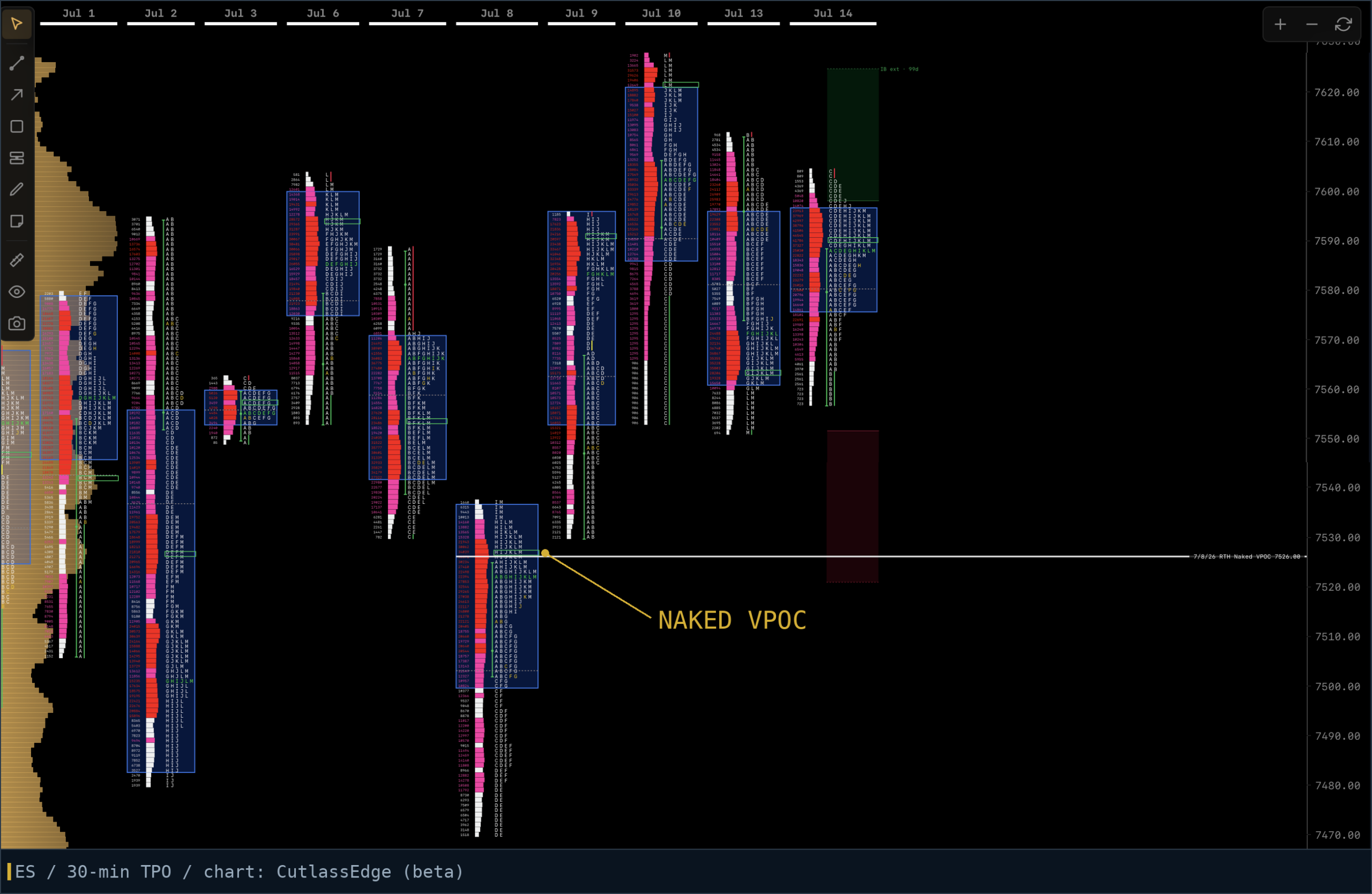
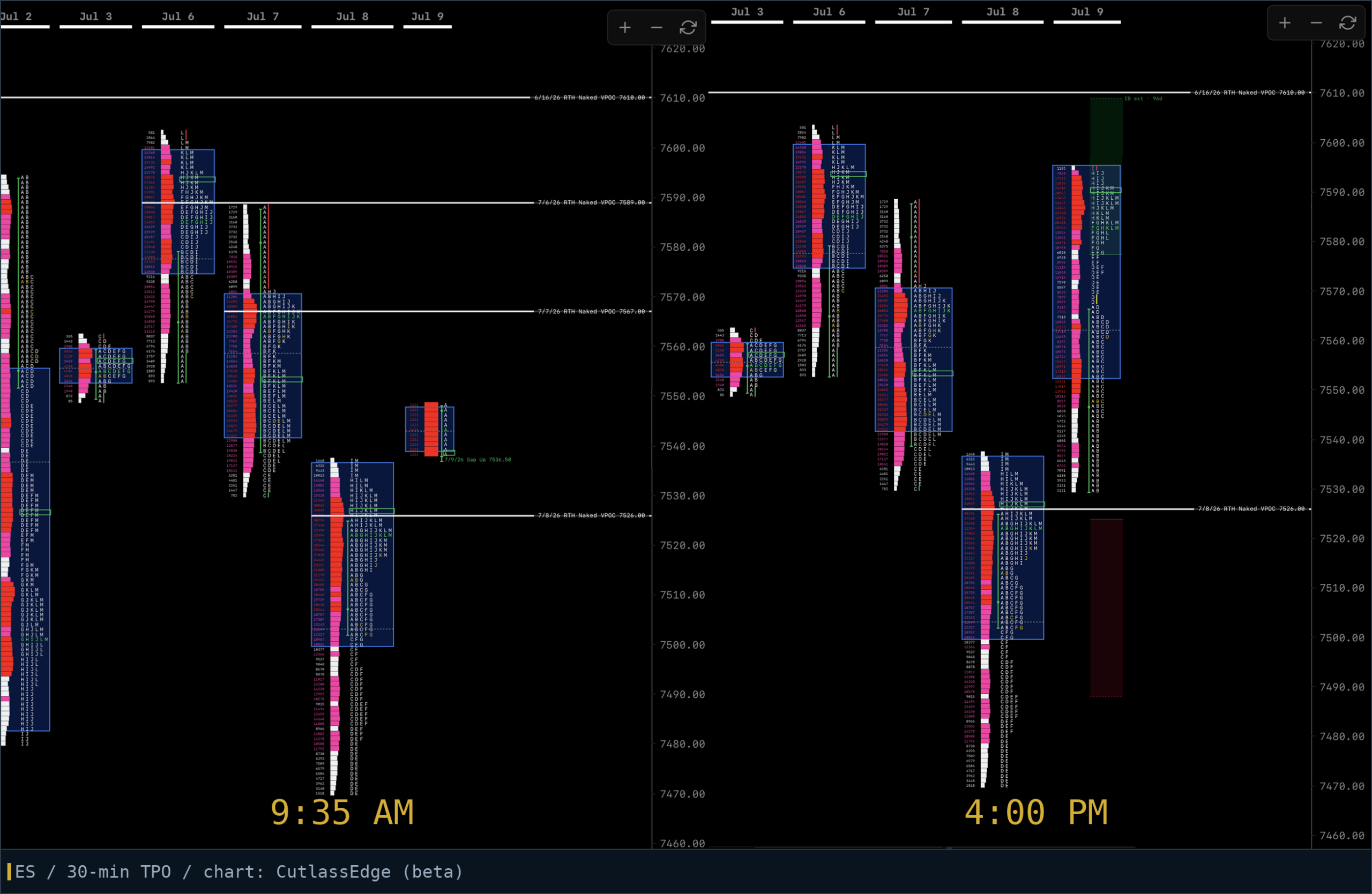
Every completed session leaves behind a point of control: the price where the most business happened that day, the session’s fairest price. When later sessions move away and price never trades back through that level, the POC is left untouched. Traders call it naked, or virgin. (Same concept, pick the word that gets fewer stares during dinner conversation.)
A naked POC stays naked until price finally comes back and trades through it. That first revisit is the event the whole concept is about.
Why an old price keeps mattering
No mysticism required; the logic is auction logic.
The POC was the fairest price of its day: the level where the two-way argument was loudest and both sides did size. When the market repriced away from it, it left that level with the most unfinished bilateral business of the whole session behind it.
So when price finally rotates back into that old neighborhood, the naked POC acts like a scheduled stop. It is the price the old auction validated hardest, and the market tends to travel to it, do a little business, and then decide. My glossary version of the rule: once price re-enters an old day’s range, that day’s volume POC becomes the natural target.
Notice what this does not say. It does not say price reverses there. It says price is drawn there. The magnet metaphor beats the wall metaphor: magnets pull, they don’t promise to bounce.
Time POC or volume POC?
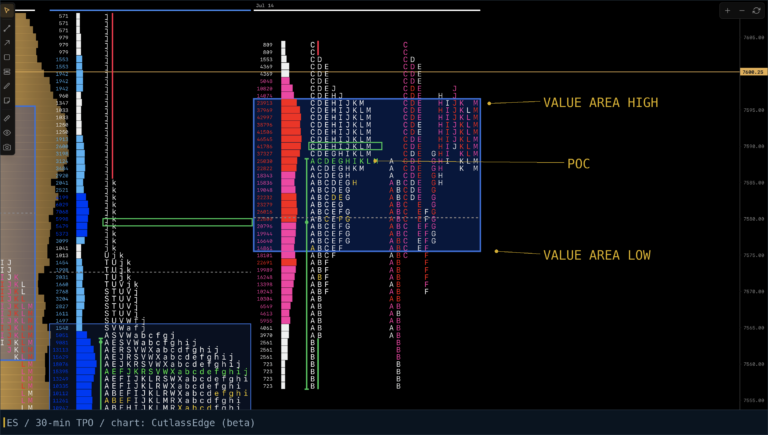
Both exist for every session: the letter-count version (time) and the contracts-traded version (volume), usually a few ticks apart, occasionally not. For the naked concept, I work off the volume POC: on the revisit days, what matters is where the old business actually cleared, and volume is the record of that.
If your platform only draws TPO POCs, they are close enough to learn the concept. Just know which one your chart is showing before you argue with someone about a level being taken out by two ticks.
How to actually use them
As targets, first and always. The highest-quality use of a naked POC is as a destination for a trade you already have a reason to be in. Long from a defended value area low with a naked POC overhead is a trade with a map. The NPOC is where you plan to take something off, not the reason you entered.
As a context read. A stack of naked POCs above the market is a to-do list the auction left itself. Markets with unfinished business overhead behave differently than markets that cleaned everything up; repair is a genuine driver of direction on quiet days.
As a reaction spot, with help. The first touch of an old NPOC often produces a reaction, and it is tradeable when it lines up with everything else (balance context, a poor structure nearby, your read of the tape into the level). Alone, blind, it is a coin flip with good branding.
It’s ok if the map gets messy
Mark every naked POC forever and your chart becomes a barcode. That is ok. I have seen in bear markets, when prices are returning to ranges from years prior, that the old naked POCs are still magnets for price. So I keep them on my chart forever until a regular trading hours session returns to them.
Two general observations that survive most traders’ rules: recent naked POCs (days to weeks old) get respected most cleanly, and very old ones matter only when price returns to a zone it has not seen in months, where they may be the only reference anyone remembers. The further price moves away from a naked POC, the less it matters, until the market comes back and gets close again, then it matters again. You’ll learn to feel this out with experience.
The mistakes
Don’t fade a trend because a naked POC is in its path. On a genuine trend day the market will eat through your treasured level at full speed and thank you for the liquidity. It’s a magnet, not a wall.
While the market will often run out of steam after reaching an old naked POC, treating the touch as a reversal signal is the wrong idea. The event is “target reached, business done.” What happens next needs its own evidence.
Don’t mark them randomly. Decide whether your POCs come from regular hours, the full 24-hour session, or RTH and overnight separately. Stay consistent, and your results will stay consistent.
FAQ
Are naked POC and virgin POC the same thing?
Yes. Same concept, two nicknames: a prior session’s point of control that price has not traded back through since.
Does a naked POC expire?
Not on a calendar. It stays live until touched, but practical relevance fades with distance and time. Most working traders keep a rolling window and archive the rest.
Should I use the TPO POC or the volume POC?
For this concept I lean volume, since the revisit logic is about where business cleared. Either works if you stay consistent.
Do naked POCs work intraday?
The same magnetism shows up with prior-day POCs during the next session, which is the most common practical use: yesterday’s POC is the first stop on many mornings’ maps. The session’s current TPOC is a magnet when the market is rotational.
What happens when price finally touches one?
It stops being naked, and the market makes a decision there: accept and keep going, start rotating, or reject and leave. The touch is the appointment, not the outcome.
Charles Gough is a full-time ES futures trader and the founder of Pirate Traders. The charts in this post were produced in the CutlassEdge development build.